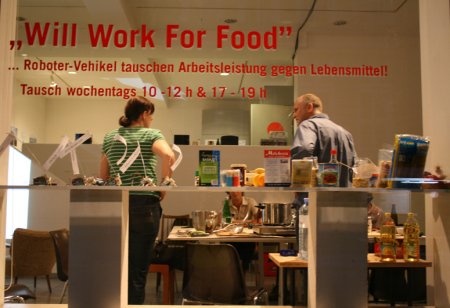
Will Work For Food
‘Will Work For Food’ is about labour and barter economy. Small robotic vehicles trade their manpower for food. The vehicles can draw and whistle the popular songs ‘Happy Birthday’ and ‘The Internationale’. People can borrow one of the vehicles and let them work for them. After completing the assignment the vehicles have to be returned or given over to somebody else who needs their skills. The bartered food is perpared and served while a public performance.
With reference to the utopian ideas of the 50s and 60s of the 20th century which yearned for the liberation of humanity from any form of labour WWFF plays with the possibility to fulfil this dream and takes over the role of the precarious subject.
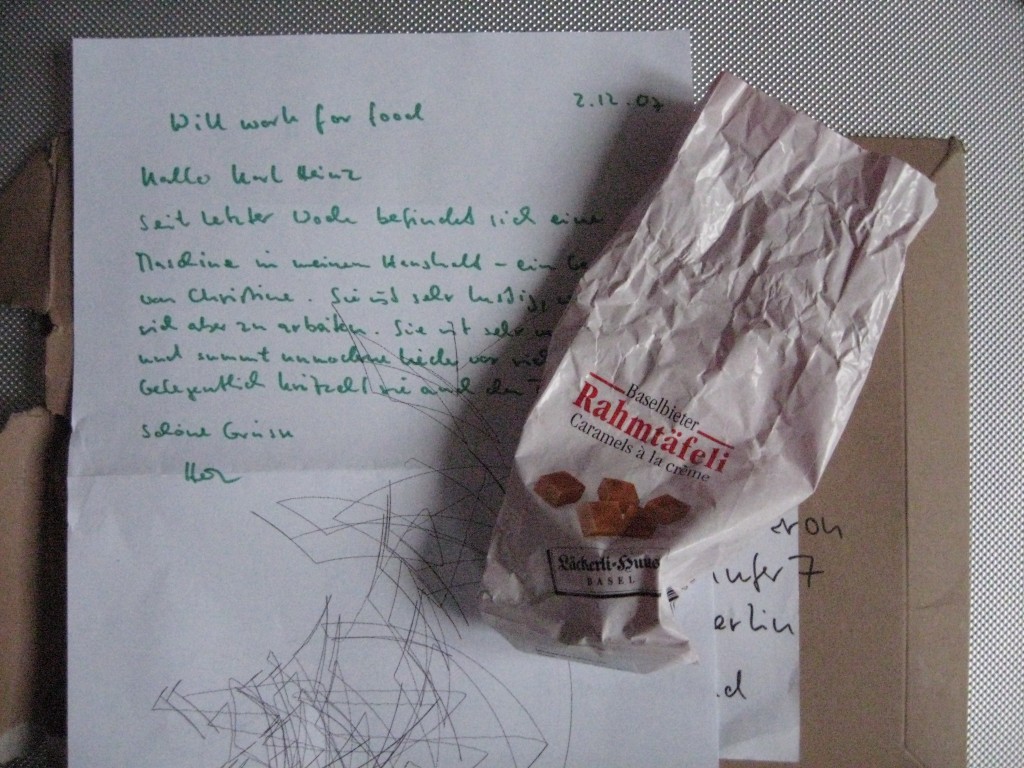
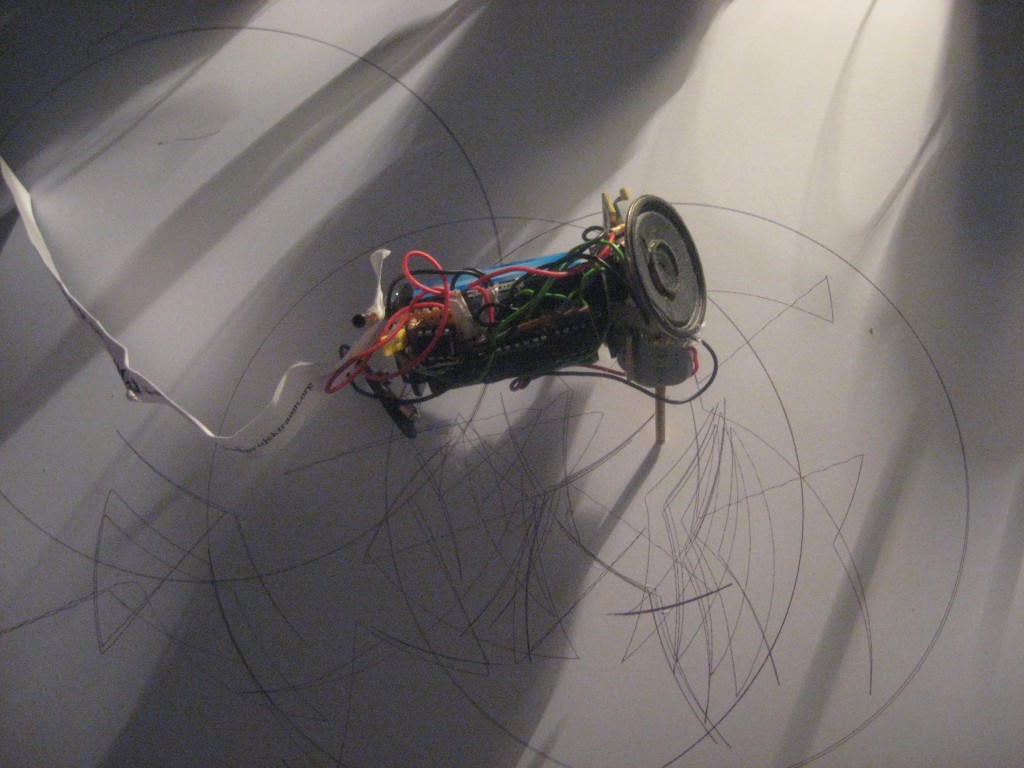
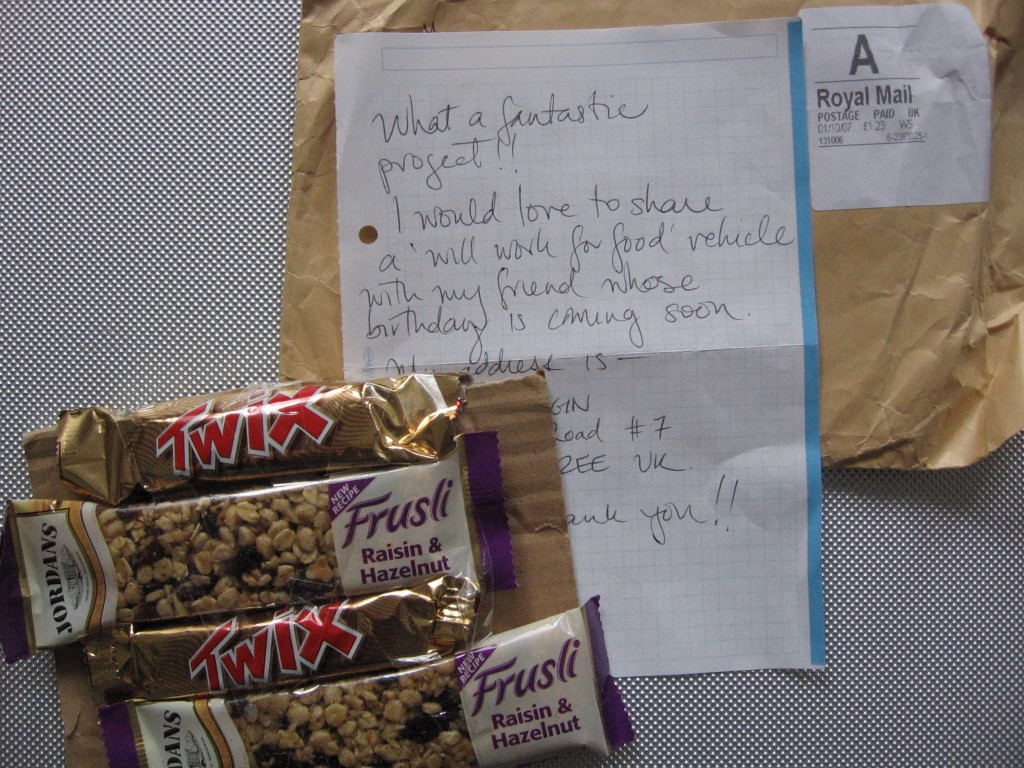
“Will Work For Food” handelt von Arbeit und Tauschökonomie. Kleine Robotervehikel tauschen ihre Arbeitsleistung gegen Lebensmittel. Die Vehikel können zeichnen und pfeifen, nämlich die Lieder “Happy Birthday” und die “Internationale”. Jeder kann sich ein solches Vehikel ausleihen und für sich arbeiten lassen. Nach Gebrauch sollen sie an andere weitergegeben werden. Die getauschten Lebensmittel werden in einer öffentlichen Aufführung zubereitet und serviert.

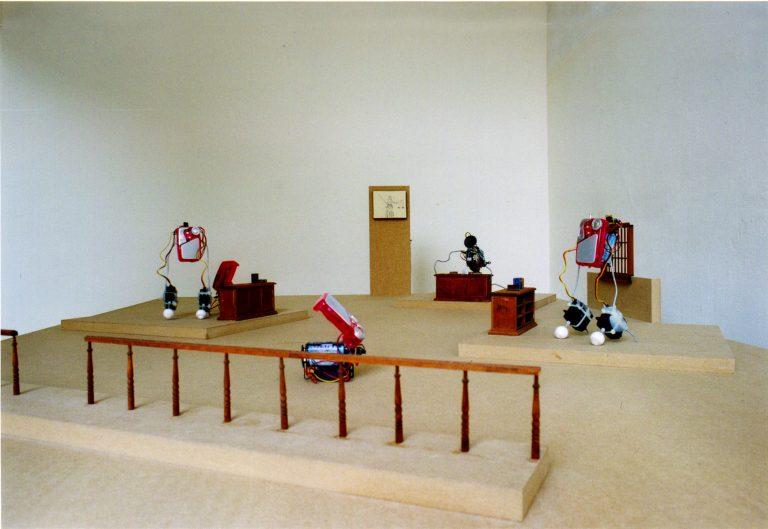

Der Name – eigentlich eine klassische “Sandwichman”-Zeile, mit der Menschen ihre Arbeitskraft für den sprichwörtlichen Hungerlohn anbieten – sagt es bereits: Hier wird nicht nur fortfolgend ein weiteres Zeichenmaschinchen vorgestellt. Sondern eines, das nachgerade furchterregend fleissig ist.
Um genau zu sein: Es handelt sich sogar um eine ganze und allem Anschein nach konjunkturbedingt wachsende Schar von Maschinchen, die unter diesem Motto kreative Dienstleistungen zu verrichten versprechen.
Was wirklich erst einmal ziemlich unheimlich klingen kann.
Besonders in den Ohren von KünstlerInnen, die sich nun nicht ganz zu Unrecht Gedanken um Lohndumping und anstehende Forderungen nach Mindestlöhnen machen werden.
http://www.homemade-labor.ch/weblog/archives/2008/01/will_work_for_f.html
“The direct barter of products attains the elementary form of the relative expression of value in one respect, but not in another. That form is x Commodity A = y Commodity B. The form of direct barter is x use-value A = y use-value B.[5] The articles A and B in this case are not as yet commodities, but become so only by the act of barter. The first step made by an object of utility towards acquiring exchange-value is when it forms a non-use-value for its owner, and that happens when it forms a superfluous portion of some article required for his immediate wants. Objects in themselves are external to man, and consequently alienable by him. In order that this alienation may be reciprocal, it is only necessary for men, by a tacit understanding, to treat each other as private owners of those alienable objects, and by implication as independent individuals. But such a state of reciprocal independence has no existence in a primitive society based on property in common, whether such a society takes the form of a patriarchal family, an ancient Indian community, or a Peruvian Inca State. The exchange of commodities, therefore, first begins on the boundaries of such communities, at their points of contact with other similar communities, or with members of the latter. So soon, however, as products once become commodities in the external relations of a community, they also, by reaction, become so in its internal intercourse. The proportions in which they are exchangeable are at first quite a matter of chance. What makes them exchangeable is the mutual desire of their owners to alienate them. Meantime the need for foreign objects of utility gradually establishes itself. The constant repetition of exchange makes it a normal social act. In the course of time, therefore, some portion at least of the products of labour must be produced with a special view to exchange. From that moment the distinction becomes firmly established between the utility of an object for the purposes of consumption, and its utility for the purposes of exchange. Its use-value becomes distinguished from its exchange-value. On the other hand, the quantitative proportion in which the articles are exchangeable, becomes dependent on their production itself. Custom stamps them as values with definite magnitudes.” Karl Marx. Capital Vol.1 Chapter 2 Exchange
Will Work For Food is a project about labour and barter economy. The bread earner is a robot able to draw and whistle “Happy Birthday”? and “The Internationale”?.
To enjoy those precious services, all you have to do is pack some food (no money!) and send it to a given address. The WWFF vehicle will be posted to you in return.
I asked KH Jeron to tell us more about this idea … http://we-make-money-not-art.com/archives/2007/08/when-and-how-di.php